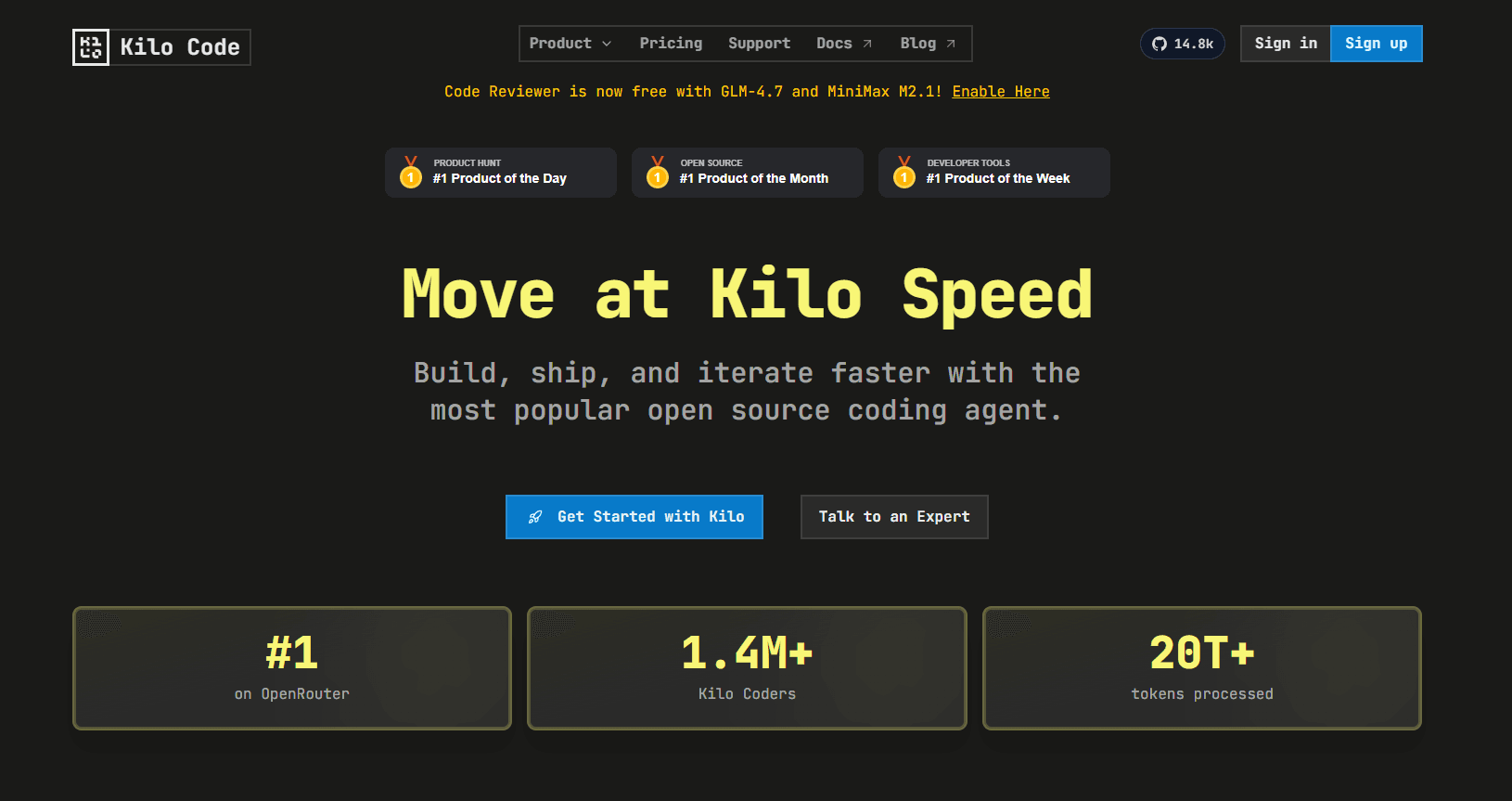
The Strategic Integration of Agentic AI in Modern Software Engineering: A Comprehensive Analysis of the Kilo Code Ecosystem, Model Economics, and Operational Best Practices
1. Introduction: The Paradigm Shift to Agentic Engineering
The landscape of software development is currently undergoing a fundamental transformation, shifting from a paradigm of syntax-heavy manual coding to one of "Agentic Engineering." In this new era, the role of the developer is evolving from a writer of code to an architect of systems and a manager of artificial intelligence agents.
This shift is epitomized by platforms like Kilo Code, which represent a departure from simple autocomplete extensions toward fully integrated environments where multiple AI models collaborate to execute complex engineering tasks.
For the uninitiated user entering this ecosystem in early 2026, the complexity of model choices, pricing structures, and integration mechanisms can be daunting. The transition from flat-rate subscription services to consumption-based "token economies" introduces a new layer of strategic decision-making.
No longer is the developer simply "using AI"; they are now allocating financial resources (credits) across a marketplace of competing intelligence providers-balancing cost, speed, and reasoning capability for every function they write.
This report serves as a definitive operational guide and strategic analysis for the new adopter of the Kilo Code platform. It specifically addresses the logistical and financial queries regarding the utilization of Kilo Credits ($20 purchase) and the interoperability of premium foundation models such as Anthropic’s Claude Opus 4.5, Google’s Gemini 3 Pro, and Moonshot AI’s Kimi 2.5.
Beyond answering the immediate questions of access and billing, this document provides a comprehensive "Masterclass" in navigating the Kilo ecosystem, ensuring that the user maximizes the value of their investment and harnesses the full potential of this open-source, multi-model gateway.
1.1 The Operational Identity of Kilo Code
To understand how to effectively utilize the $20 credit, one must first grasp the architectural identity of Kilo Code. Unlike proprietary "walled gardens" that lock users into a single model family, Kilo Code operates as a "Provider Aggregator" and "Model Router".
It functions as a neutral interface layer that connects the developer’s Integrated Development Environment (IDE) to a global network of over 30 AI providers and 500+ distinct models.
This distinction is critical. When a user purchases Kilo Credits, they are not merely buying access to a software tool; they are acquiring a universal currency valid across the entire spectrum of supported AI intelligence.
1.2 "Kilo Speed" and the Philosophy of Flow
The platform is built around a concept termed "Kilo Speed"-defined as a state of effortless, joyful flow achieved when a developer can focus on high-level problem solving without the friction of dependencies, blockers, or manual boilerplate generation.
This philosophy dictates the tool's design, favoring "Agentic" workflows where the AI is granted the autonomy to read files, plan architectural changes, execute code modifications, and verify its own output.
2. The Economic Architecture of the Kilo Code Ecosystem
The user’s query highlights a common confusion regarding the financial mechanics of modern AI platforms: the difference between "Seat-Based" subscriptions (common in 2023-2024) and "Consumption-Based" pricing (dominant in 2026).
2.1 The Universal Credit System: A Single Currency for Global Intelligence
Kilo Code operates on a transparent, 1:1 credit system where one credit equals one US dollar ($1 USD). This simplicity belies the powerful utility of the system.
Operational Reality of the $20 Credit:
When a user tops up their account with $20, that value is universally fungible. It is not partitioned into "Claude Credits" or "Gemini Credits."
No Expiration and No Markup:
Paid Credits never expire. The platform claims to pass through provider costs without markup.
2.2 The Subscription vs. Top-Up Dichotomy
One-Time Top-Up: Recommended entry point for new users.
Kilo Pass: Monthly subscription with bonus credits (e.g., Starter $19/mo ≈ $26.60 credits).
2.3 The "Bring Your Own Key" (BYOK) Alternative
Advanced users can input personal API keys, bypassing Kilo Credits-but for most individuals, the credit system is superior.
3. The Kimi 2.5 Phenomenon: Logistics, Architecture, and Pricing
3.1 The "Free Week" Promotional Mechanism
During the promotional period, moonshotai/kimi-k2.5:free is available at $0.00 cost (with potential rate limits).
3.2 Post-Trial Logistics: The "API Key" Question Answered
No, You do not need a separate API key for Kimi 2.5. After the free period, usage debits from your Kilo Credits seamlessly.
3.3 Technical Architecture: The "Thinking" Model
Kimi 2.5 uses internal Chain of Thought for better reasoning on complex tasks-at roughly 10x cheaper than Claude Opus 4.5.
4. The Premium Tier: Integrating Claude Opus 4.5 and Gemini 3 Pro
4.1 Claude Opus 4.5: The Gold Standard of Reasoning
≈ $5.00 / million input tokens. Ideal for mission-critical accuracy.
4.2 Gemini 3 Pro: The Master of Context
≈ $2.00 / million input tokens. Massive context window (2M+ tokens) for entire repositories.
4.3 The "Provider Aggregator" Advantage for Premium Models
Kilo aggregates rate limits for better reliability than direct API access.
5. Strategic Operational Guide: The "Router" Methodology
5.1 The Tiered Intelligence Strategy
- Tier 1 (Architects): Claude Opus 4.5, Gemini 3 Pro (5-10% of prompts)
- Tier 2 (Workhorses): Kimi 2.5, GPT-5.1, Claude 3.5 Sonnet (70%)
- Tier 3 (Sprinters): Gemini 3 Flash, Mistral Devstral (20-25%)
5.2 Implementation: How to Switch Models in Kilo Code
Use the model selector, pin favorites, and manage context during switches.
5.3 The "Ask vs. Architect" Modes
Ask Mode (read-only), Architect Mode (planning), Code Mode (execution). Refine prompts cheaply first.
6. Advanced Platform Features: Beyond Basic Chat
- Automated Code Reviews (custom personalities)
- App Builder & Cloud Agents (long-running tasks)
- Cross-Platform Sessions (sync across devices)
7. Comparative Market Analysis: Kilo Code vs. The World
vs. GitHub Copilot (seat-based, limited models) • vs. Cursor (integrated fork, subscription limits).
Kilo offers maximum flexibility and model choice.
8. Detailed Technical & Financial Specifications
8.1 Model Pricing and Performance Matrix (Feb 2026)
| Category | Model | Est. Input Cost (per 1M) | Est. Output Cost (per 1M) | Key Strength |
|---|---|---|---|---|
| Elite / Premium | Claude Opus 4.5 | $5.00 | $15.00+ | Unmatched reasoning |
| Elite / Premium | Gemini 3 Pro | $2.00 | $8.00+ | Massive context |
| Disruptor / Value | Kimi 2.5 (Thinking) | $0.30-$0.60 | $2.50 | High cost-efficiency |
8.2 Understanding Token Consumption
1 Token ≈ 0.75 words. Large tasks cost far more on premium models-use tiered routing to stretch $20.
9. Future Trends and the "Commoditization of Intelligence"
Race to zero pricing • Rise of specialized agents • Standardization of massive context windows.
10. Conclusion: The $20 "Passport" to AI Mastery
Your $20 credit unlocks Claude Opus 4.5, Gemini 3 Pro, Kimi 2.5-no separate keys needed. Adopt the router strategy and master agentic workflows.
11. Appendix: Troubleshooting and Common Pitfalls
- Rate Limits vs. Credit Limits
- Context Window Errors
- Hallucinations → Use self-healing loops
12. Final Checklist for the User
- Install Kilo Code Extension in VS Code.
- Create Account and verify email.
- Purchase $20 Credit (One-time top-up).
- Select "Kimi 2.5 (Free)" to start.
- Pin premium models.
- Run first Ask Mode and Code Mode tasks.